American J1772 V2L Power Outlet Adapter – EV Discharger Converter
American J1772 V2L Power Outlet Adapter – EV Discharger Converter
American J1772 V2L Power Outlet Adapter with NEMA 5-20R Output
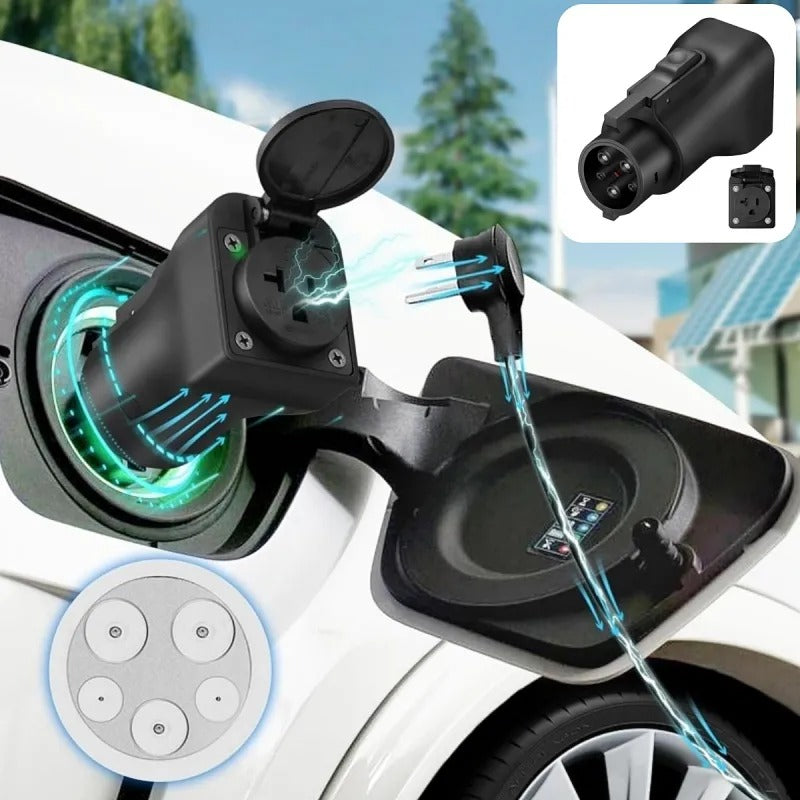
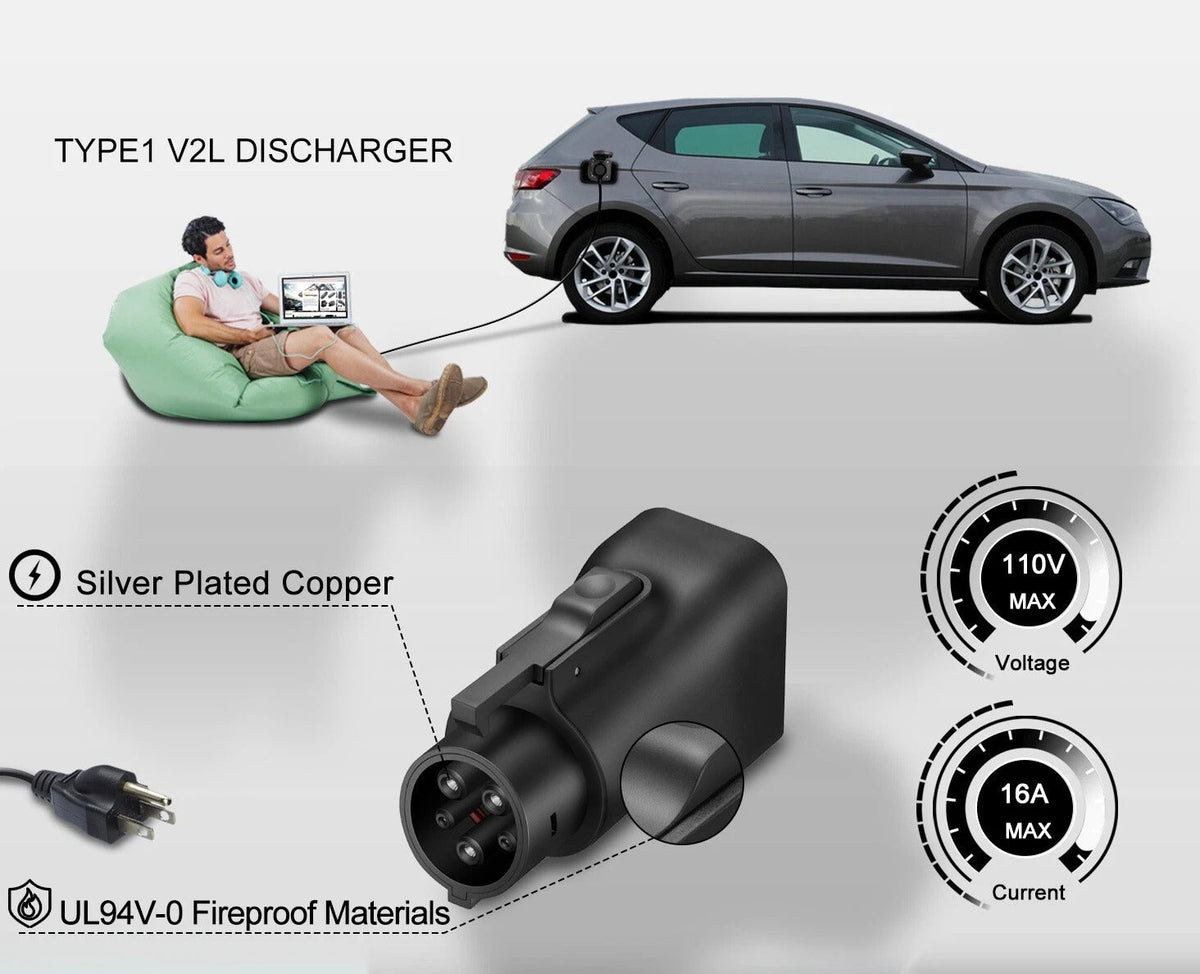
Use the factory Vehicle-to-Load function of a compatible J1772-equipped EV to provide portable 110–125V AC power for supported appliances, tools and electronics. The adapter connects to a V2L-enabled Type 1 charging port and provides a North American NEMA 5-20R outlet.
⚠️ VEHICLE MUST ALREADY SUPPORT V2L
This adapter does not add Vehicle-to-Load functionality to an EV. Your vehicle must already support AC power discharge through its Type 1 / SAE J1772 charging port from the factory. If the vehicle does not support J1772 V2L discharge, this adapter will not enable it. Always confirm your exact vehicle, model year and market specification before ordering.
⚠️ Not for Tesla Model 3 / Model Y / Model S / Model X
Tesla currently does not provide Powershare functionality on Model 3, Model Y, Model S or Model X. Do not purchase this J1772 V2L adapter expecting it to add external AC power output to those vehicles.
⚠️ Not a Replacement for the Tesla Cybertruck Powershare System
Cybertruck uses Tesla's Powershare system. Tesla specifies a compatible Gen 3 Mobile Connector and Tesla Outlet Adapter for charge-port AC output on supported Cybertruck configurations. This generic J1772 V2L adapter should not be presented as a substitute for Tesla's required Powershare hardware.
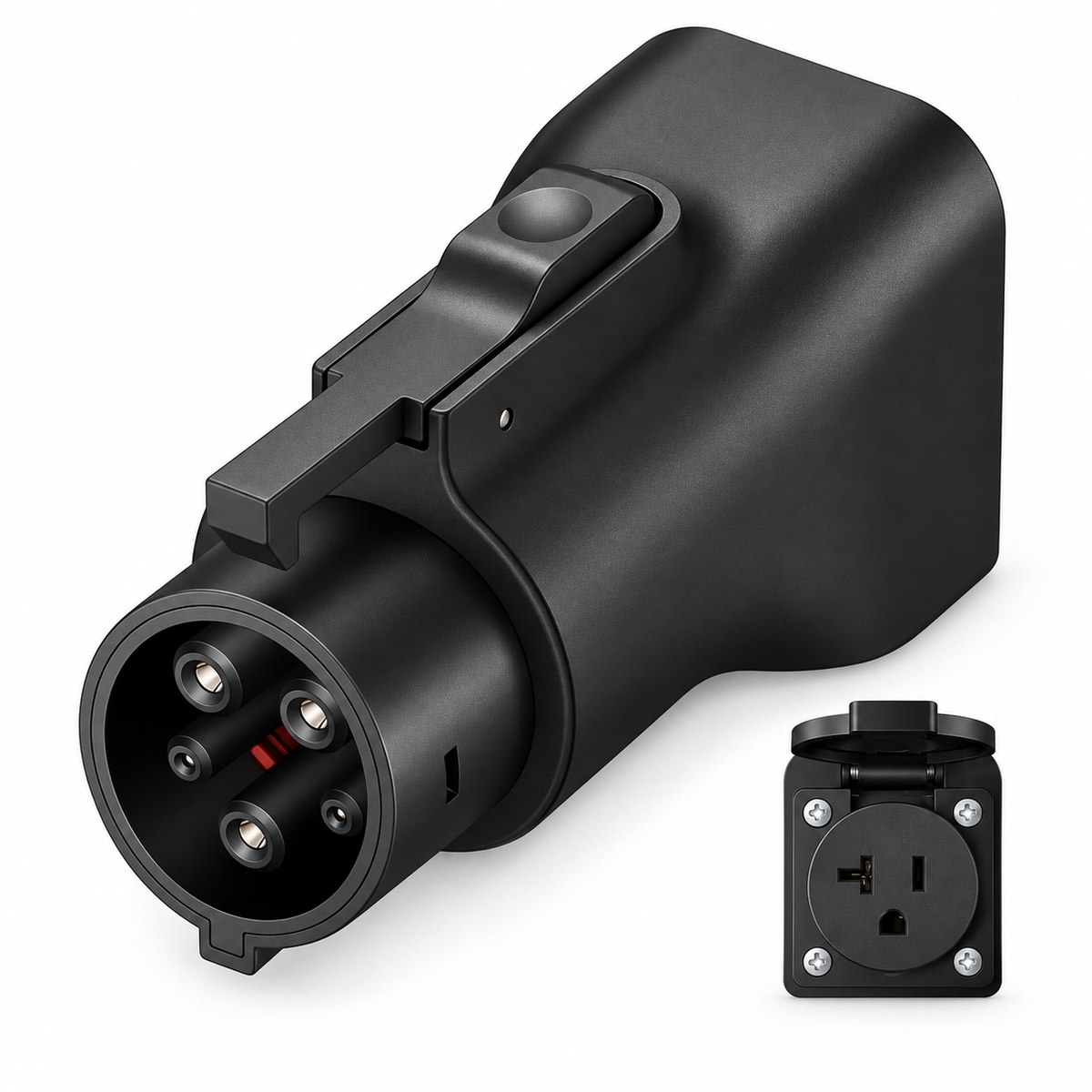
🔌 SAE J1772 Input
Designed for compatible North American Type 1 / SAE J1772 EV charging ports that support factory V2L discharge.
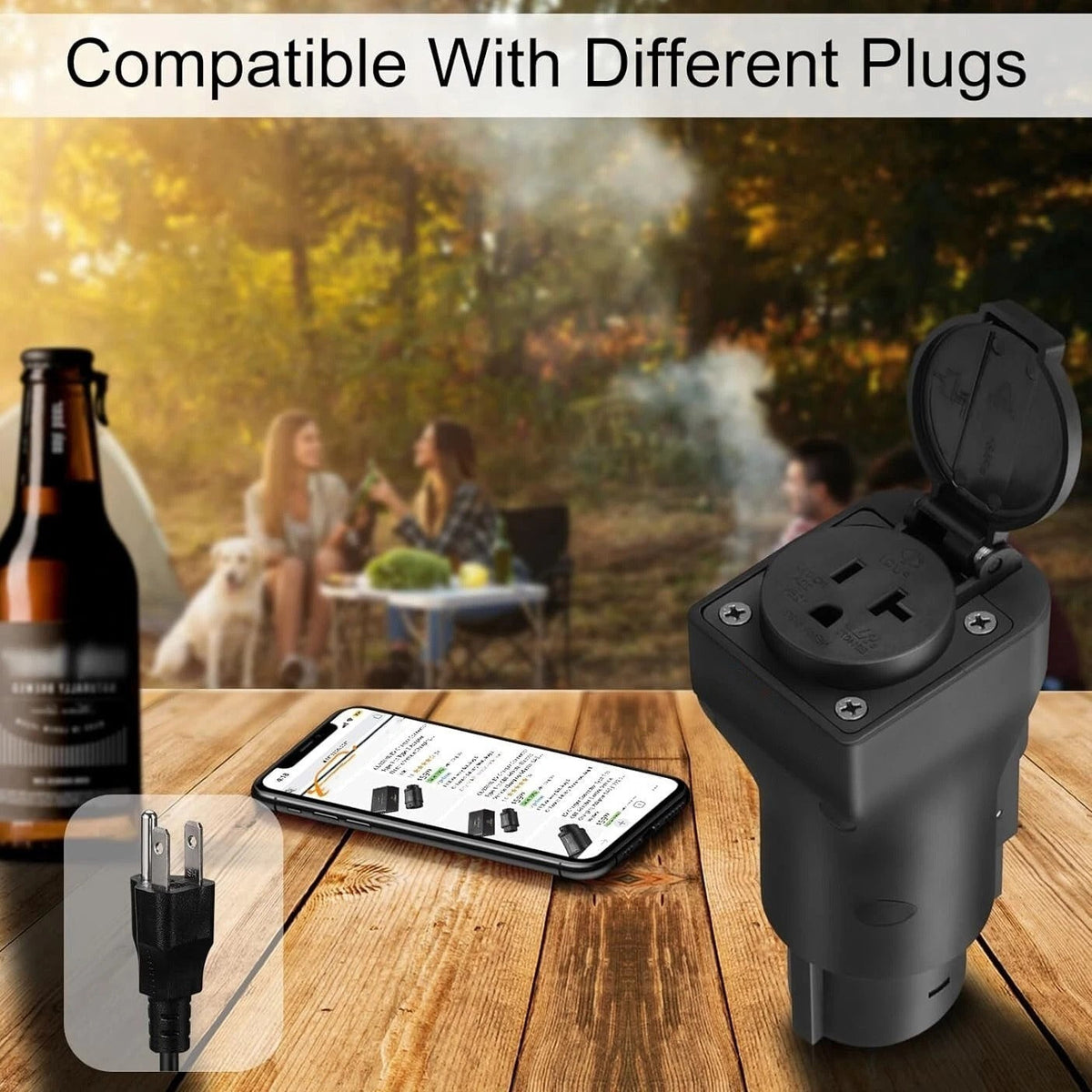
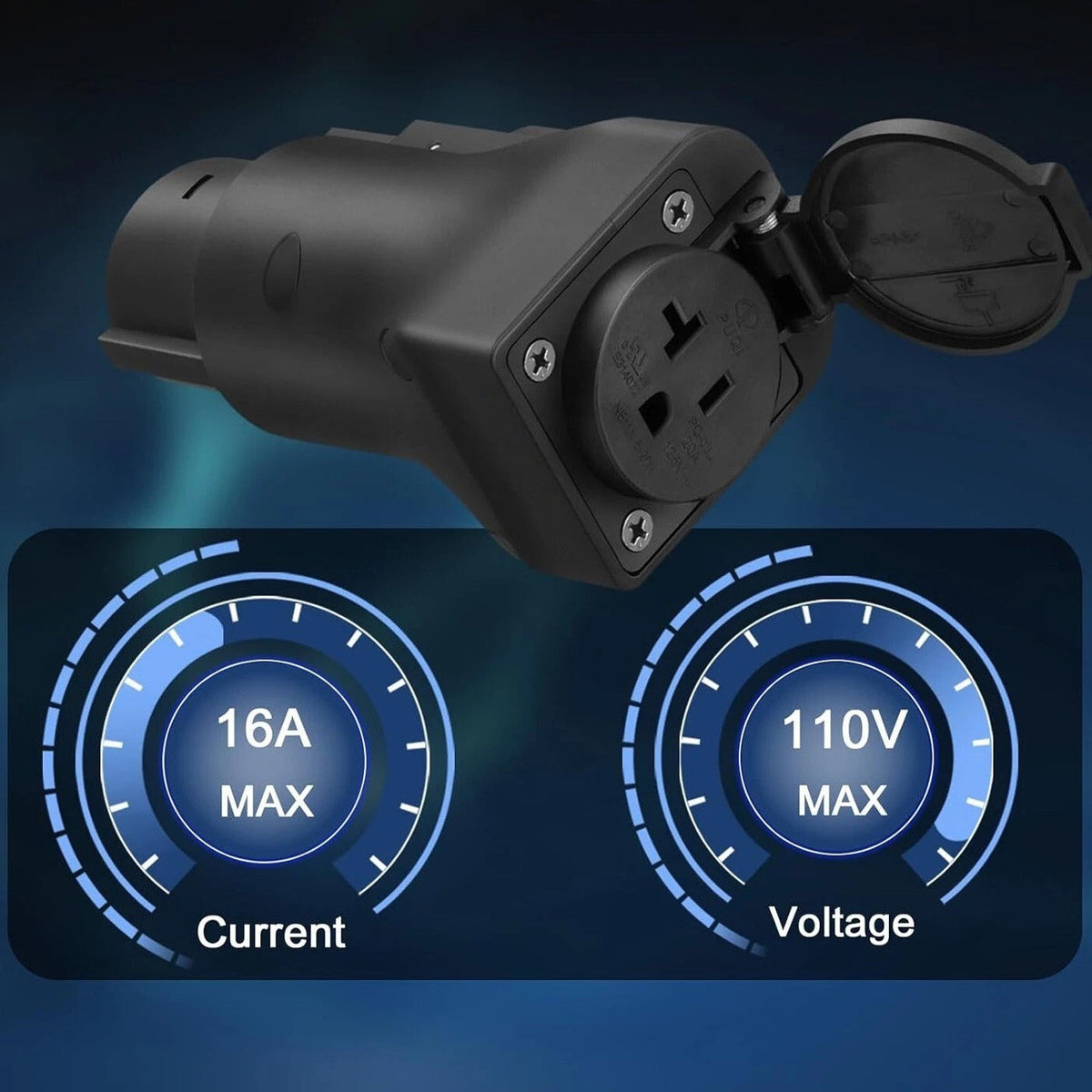
⚡ NEMA 5-20R Outlet
Provides a North American NEMA 5-20R receptacle that can also accept standard NEMA 5-15P plugs.
🔥 Flame-Retardant Housing Material
The supplier specifies casing material rated to UL94 V-0 flammability classification for improved resistance to flame propagation.
🧳 Compact Portable Design
Compact enough to keep in a vehicle for camping, outdoor activities or other situations where compatible V2L power is available.
UL94 V-0 Does Not Mean the Entire Adapter Is UL Certified
The supplier states that the housing material meets a UL94 V-0 flammability grade. That is a material flammability classification and should not be described as UL certification or UL listing of the complete finished adapter unless separate certification documentation is provided.
Published Electrical Ratings
| Specification | Published Rating |
|---|---|
| EV Connector | Type 1 / SAE J1772 |
| AC Outlet | NEMA 5-20R |
| Compatible Appliance Plug | NEMA 5-15P / NEMA 5-20P |
| Output Voltage | 110–125V AC |
| Maximum Current | 16A |
| Maximum Power | Approx. 1.9kW |
NEMA 5-20R Receptacle, 16A Adapter Limit
Although the physical output receptacle is a NEMA 5-20R design, the supplier rates this adapter itself at a maximum of 16A and approximately 1.9kW. Always stay within the lower limit of the adapter, the vehicle's V2L system and the connected appliance.
Silver-Plated Copper Conductors
The supplier specifies silver-plated copper conductors inside the adapter to provide the electrical connection between the vehicle's supported V2L output and the AC receptacle.
Spring-Loaded Outlet Cover
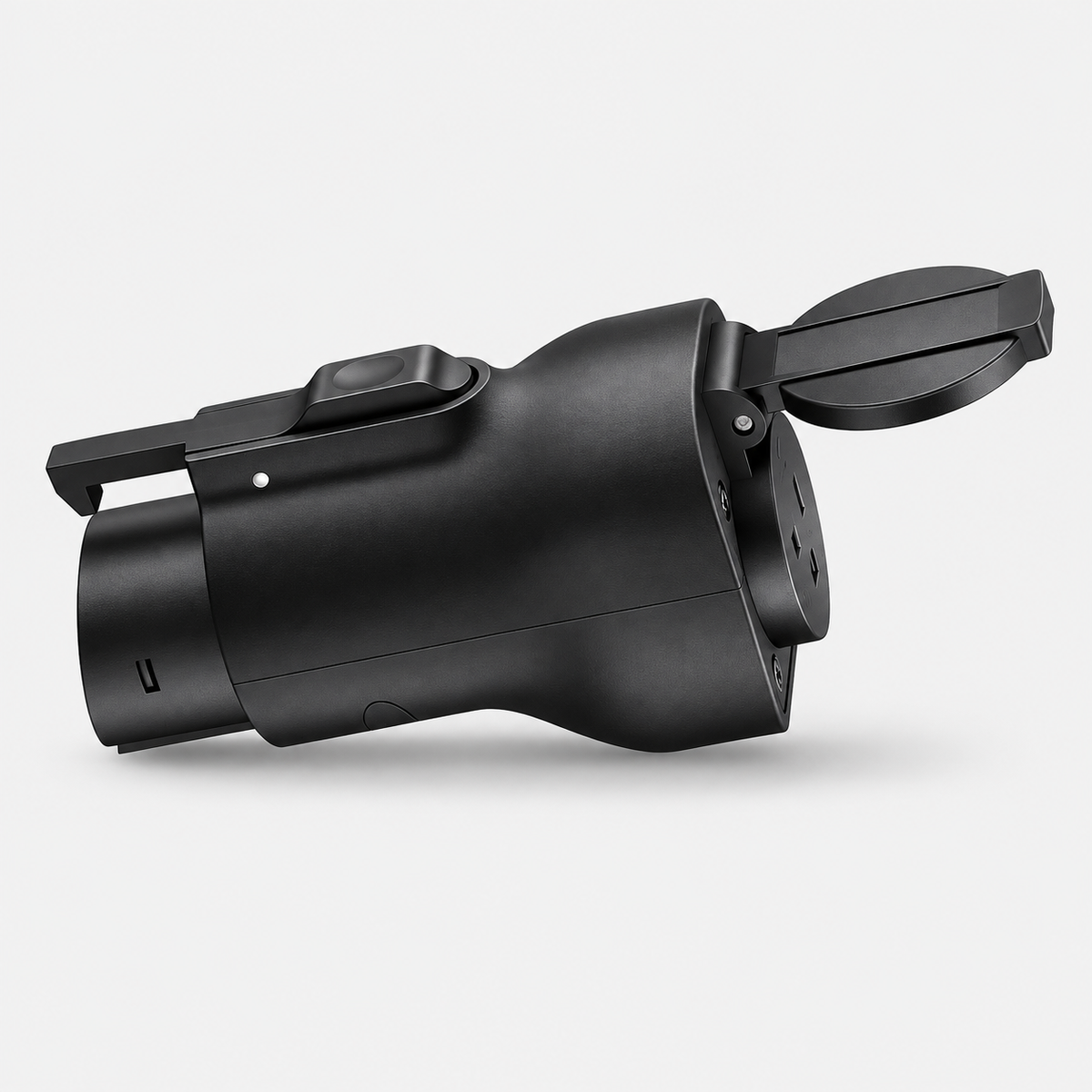
The NEMA outlet includes a spring-loaded flip-top cover that helps shield the socket opening from dust, debris and incidental environmental exposure while it is not in use.
Keep the protective cover closed whenever no appliance is connected.
⚠️ Weather-Resistant Does Not Mean Waterproof
The supplier describes the outlet as weather-resistant and provides a protective flip cover, but no IP rating is published. Do not immerse the adapter, use it in standing water or make electrical connections with wet hands or wet connectors.
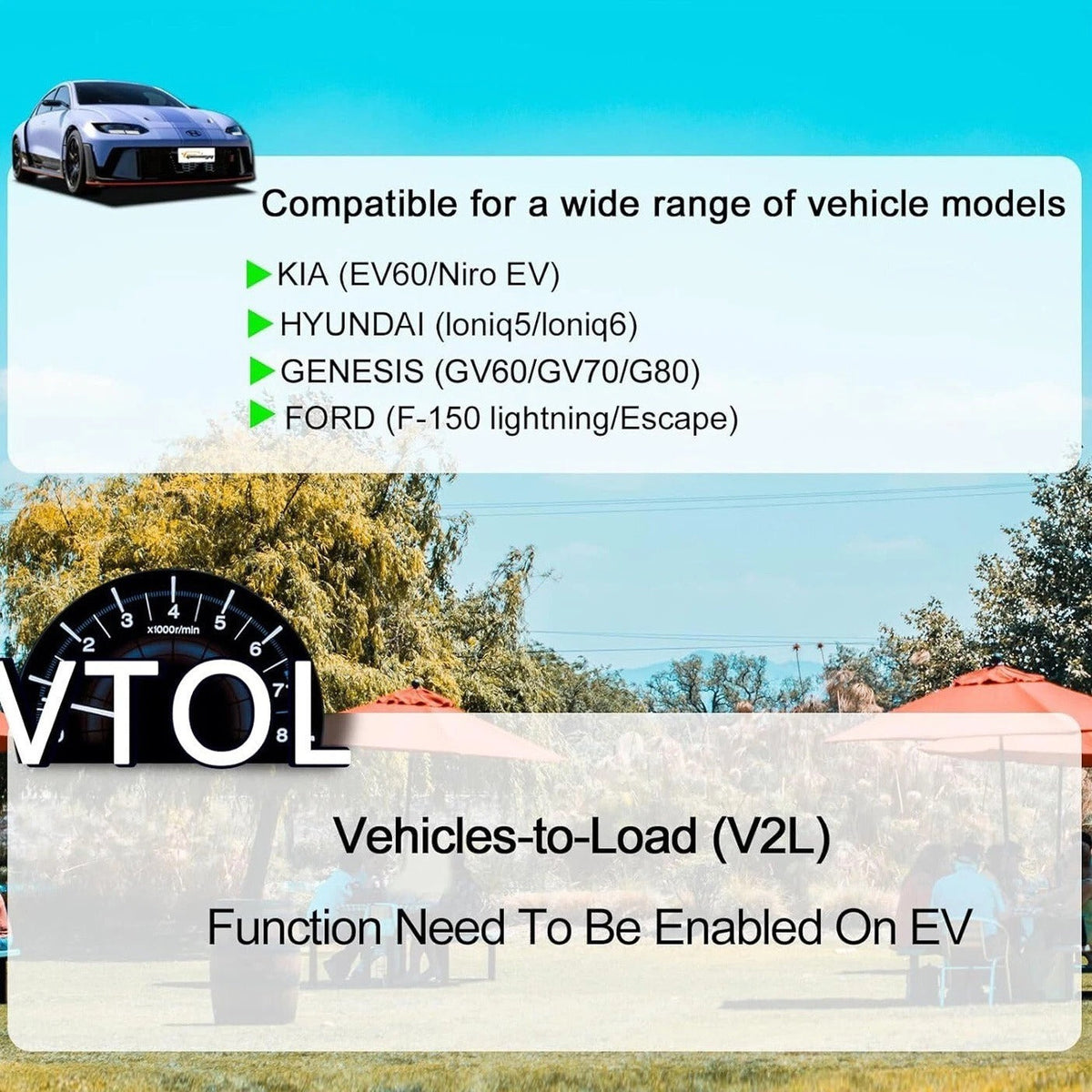
Vehicle Compatibility Requirement
This adapter is intended only for electric vehicles that support Vehicle-to-Load discharge through a Type 1 / SAE J1772 charge port.
A J1772 charging port by itself does not mean the vehicle supports V2L. V2L capability must be built into the vehicle and enabled by the manufacturer.
⚠️ Confirm Your Exact Vehicle Before Ordering
The supplier provides examples of V2L-capable vehicles, but compatibility can vary by model year, trim, country and vehicle software. Do not purchase based only on a vehicle name. Confirm that your exact vehicle supports AC V2L discharge specifically through its J1772 charging port.
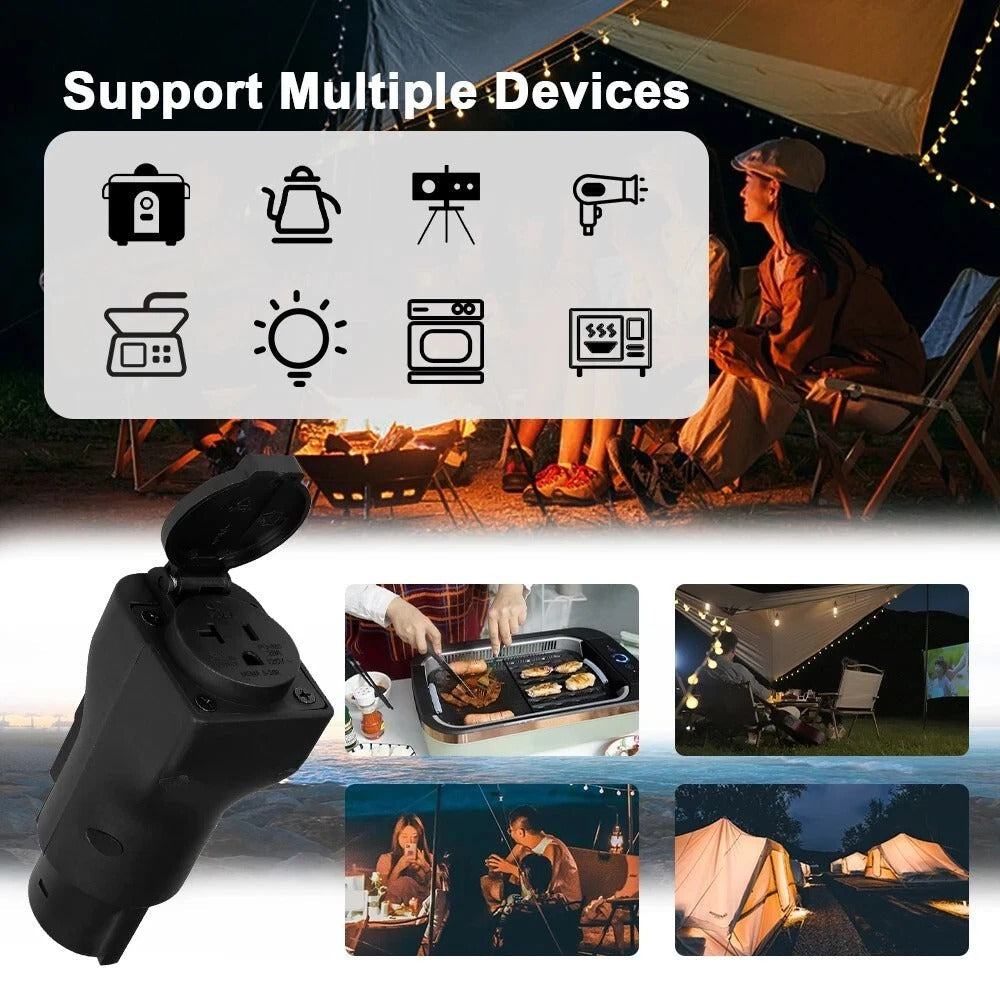
Typical Uses on a Compatible V2L Vehicle
Camping & Tailgating
Power compatible low-to-moderate-load appliances and electronics within the vehicle and adapter output limits.
Remote Work
Run compatible laptops, displays, chargers and networking equipment away from a conventional wall outlet.
Tools & Outdoor Equipment
Power compatible AC equipment where the required starting and running loads remain within the available V2L capacity.
Temporary Emergency Power
Can provide temporary power to suitable household devices during an outage when used with a compatible factory-V2L vehicle.
⚠️ Do Not Rely on This Adapter for Life-Support Equipment
Do not use this product as the sole power source for life-support or other equipment where interruption of power could create an immediate safety risk. Vehicle V2L output can stop because of battery limits, vehicle settings, fault conditions or connected-load issues.
⚠️ Check Appliance Running & Startup Power
Some appliances, refrigerators, pumps, compressors, power tools and heating devices can draw substantially more power when starting than during normal operation. The appliance's startup and continuous demand must remain within both the vehicle's V2L capability and the adapter's published limits.
General Use Guide
1. Verify V2L Compatibility
Confirm in your vehicle owner's manual that the exact EV supports V2L discharge through its Type 1 / J1772 charging port.
2. Park the Vehicle
Place the vehicle in Park and follow the manufacturer's instructions for enabling V2L.
3. Inspect the Adapter
Do not use the adapter if the housing, J1772 connector, AC socket or electrical contacts are damaged.
4. Connect to the Vehicle
Insert the J1772 connector fully into the compatible V2L-enabled charge port.
5. Enable Vehicle V2L Output
Follow the vehicle manufacturer's procedure to activate discharge mode if required.
6. Connect the Appliance
Plug a compatible NEMA 5-15P or 5-20P appliance into the AC receptacle.
7. Monitor the Load
Make sure the connected load remains within the vehicle and adapter ratings throughout use.
Disconnect Safely
1. Turn Off the Appliance
Stop or switch off the connected load before disconnecting whenever practical.
2. Unplug the Appliance
Remove the AC plug from the NEMA outlet.
3. Stop V2L
Disable the vehicle's discharge mode according to the vehicle manufacturer's instructions.
4. Remove the J1772 Adapter
Disconnect the adapter from the vehicle and close the outlet cover before storage.
⚠️ Electrical Safety
Do not use damaged cables, adapters or appliances. Do not modify the adapter, defeat protective grounding, expose energized connections or use the product outside the ratings published by the vehicle manufacturer and adapter supplier.
⚠️ Never Backfeed a Building Through a Wall Outlet
Do not connect this adapter to a household receptacle using a male-to-male cable or any improvised backfeed connection. Powering building wiring requires properly designed transfer equipment and professional installation in accordance with local electrical requirements.
Specifications
| Attribute | Published Specification |
|---|---|
| Product Type | J1772 Vehicle-to-Load Power Outlet Adapter |
| Regional Standard | North American Standard |
| EV Connector | Type 1 / SAE J1772 |
| AC Receptacle | NEMA 5-20R |
| Plug Compatibility | NEMA 5-15P / NEMA 5-20P |
| Output Voltage | 110–125V AC |
| Maximum Current | 16A |
| Maximum Power | Approx. 1.9kW |
| Conductors | Silver-Plated Copper |
| Housing Material Rating | Supplier States UL94 V-0 Flame-Retardant Grade |
| Required Vehicle Feature | Factory V2L Through SAE J1772 Port |
⚠️ Unpublished Specifications
The current exact product page does not publish an IP rating, complete-product UL / ETL certification, GFCI specification, operating temperature range, cable-gauge specification, surge rating, product dimensions, product weight or detailed grounding / protection architecture. Do not add these claims unless separately documented for this exact product.
Quick Answers
What does this adapter do?
It converts the factory V2L output of a compatible SAE J1772-equipped EV into a North American NEMA 5-20R AC outlet.
Does it add V2L capability to my EV?
No. The vehicle must already support Vehicle-to-Load discharge through its J1772 charging port.
Will it work with Tesla Model 3, Model Y, Model S or Model X?
No V2L compatibility should be assumed. Tesla currently states that Powershare is not available on Model S, Model 3, Model X or Model Y.
Can I use it with Cybertruck?
This product should not be marketed as a Cybertruck Powershare adapter. Tesla specifies its own supported Powershare hardware and procedure for charge-port AC output.
What output does it provide?
The supplier rates the adapter at 110–125V AC, up to 16A and approximately 1.9kW.
What outlet does it use?
It uses a NEMA 5-20R receptacle and accepts standard NEMA 5-15P and 5-20P plugs.
Is the adapter UL certified?
The supplier states that the housing material is UL94 V-0 flame-retardant grade. That does not by itself establish UL listing or certification of the complete adapter.
Is it waterproof?
No IP waterproof rating is published. The outlet includes a protective flip cover and is described as weather-resistant, but it should not be treated as waterproof.
Can I power my house by plugging it into a wall outlet?
No. Never use an improvised backfeed or male-to-male connection. Building backup power requires properly designed transfer equipment and installation that complies with applicable electrical requirements.
Can I connect any appliance under 1.9kW?
Not automatically. Check both running and startup power, and follow the limits of the vehicle's V2L system as well as the adapter and appliance.
Couldn't load pickup availability
Product features
Product features
Materials and care
Materials and care
Merchandising tips
Merchandising tips
Share