
Bulk Household Essentials for Families: A 2026 Guide
Table of Contents
- Why Buying in Bulk Makes Sense for Your Family Budget
- Quick Comparison: Top Bulk Essentials to Stock Up On
- The Best Household Items to Buy in Bulk: Our Top Picks
- How to Organize Bulk Household Supplies for Easy Access
- How We Chose These Products and What to Look For
- Which Bulk Essentials Should You Buy First?
- Conclusion: Start Saving with Bulk Household Essentials
- Frequently Asked Questions
Last Updated: September 7, 2026
Families throw away a surprising amount of money on household staples bought one pack at a time. The solution is buying bulk household essentials for families, a strategy that cuts both the unit price and the number of shopping trips you make each month. This guide from BACKUPMYFILESNOW breaks down which items are worth the upfront cost, how to store them without a dedicated pantry, and how to track what you have before you run out.
The core idea is simple: shift your spending from frequent, small purchases to less frequent, larger ones. This works best for non-perishables and paper goods, where the shelf life is long and the storage requirements are minimal.
Why Buying in Bulk Makes Sense for Your Family Budget
The primary benefit of bulk purchasing is the lower cost per ounce or unit price. When you buy a 30-pack of paper towels instead of a single roll, you are paying for the product, not the individual packaging and retail markup.
Bulk buying also reduces the frequency of emergency runs to the store. Fewer trips mean less impulse spending on items you didn’t plan to buy.
Quick Comparison: Top Bulk Essentials to Stock Up On
Not every item belongs on your bulk list. Perishables and items with a short shelf life are poor candidates. The table below summarizes the categories we recommend prioritizing, what to look for, and the typical storage footprint.
| Category | Best Bulk Format | Storage Needs | Risk Factor |
|---|---|---|---|
| Paper Goods | Multi-pack rolls (24-48 count) | Dry shelf or closet | Low |
| Cleaning Supplies | Concentrates, 50-count trash bags | Under-sink or garage | Low |
| Personal Care | Family-sized bottles | Bathroom cabinet | Medium (space) |
| Garbage Bags | 50-100 count boxes | Stackable bin | Low |
The Best Household Items to Buy in Bulk: Our Top Picks
Focus your bulk budget on items your family uses daily and that store well. Paper goods, cleaning supplies, and personal care products dominate this list because they are non-perishable and have predictable consumption rates. You can find many of these staples alongside other Grocery & Food and Home & Lifestyle essentials through BACKUPMYFILESNOW's bulk catalog.

Paper Goods: Stocking Up on Toilet Paper and Paper Towels
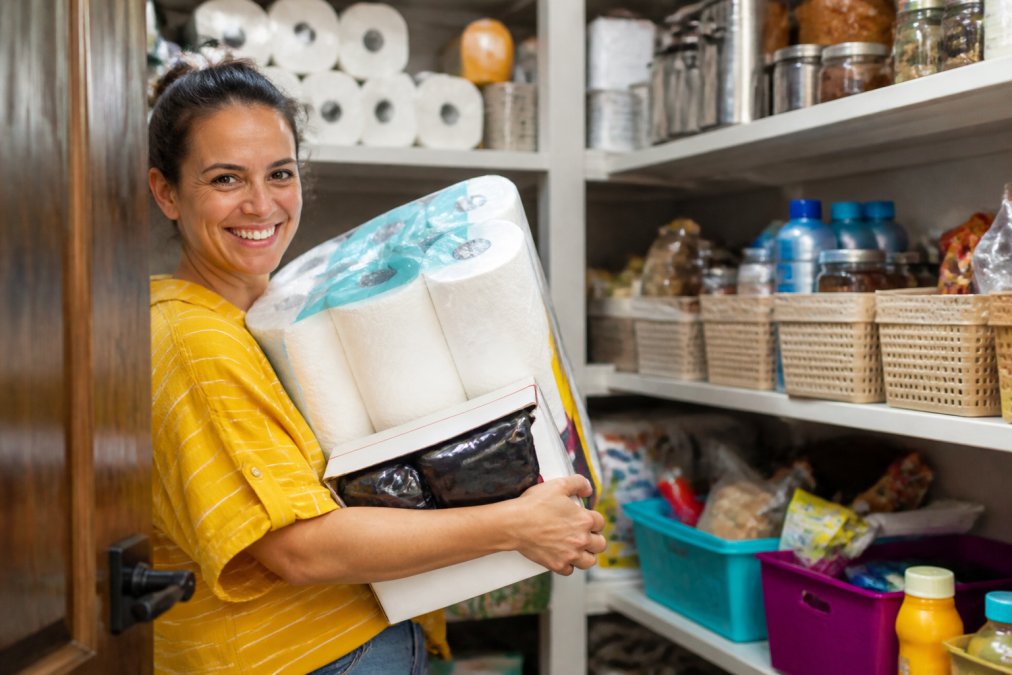
Paper products are the classic bulk purchase for good reason. They take up vertical space but never spoil. For toilet paper, look for multi-roll packs that offer a lower cost per roll. A coreless design, like the bulk roll options reviewed by consumer testing groups, also means more product fits in the same storage space.
We recommend starting with a 30-box supply of paper towels if your family goes through them quickly. This quantity, available for $29.99, covers most households for over a month. For toilet paper, a 16 to 48-roll pack at $58.99 offers the best balance between upfront cost and long-term savings, reducing the need for mid-month restocking.

Cleaning Supplies: From Trash Bags to All-Purpose Sprays
Cleaning supplies are another high-value bulk category, but they require more careful storage. Heavy-duty grease cleaners and all-purpose sprays should be kept away from food and out of reach of children.
A 50-count box of 30-gallon drawstring trash bags at $23.99 is a solid starting point for most kitchens. For smaller bins, a 100-piece pack of standard garbage bags offers flexibility. When buying liquid cleaners in bulk, check the concentration. A heavy-duty grease cleaner with a mild formula can handle range hoods and stoves without harsh fumes, making it a safer choice for a busy household.
Personal Care and Hygiene Essentials
Stocking up on personal care items, from soap to shampoo, prevents those late-night discoveries that you are completely out. These items are non-perishable and have a long shelf life.
Consider buying family-sized bottles of shampoo and body wash to reduce packaging waste and cost. Cleaning gloves are a practical addition to this category, protecting your hands from harsh chemicals while you tackle deep cleaning sessions. A multi-pack of waterproof kitchen gloves ensures you always have a dry pair ready.
How to Organize Bulk Household Supplies for Easy Access
The biggest obstacle to bulk buying is usually storage, not the purchase itself. A stockpile that is disorganized becomes wasted money when you forget what you own and buy duplicates. An effective system uses clear zones and a simple inventory log.
Smart Storage Solutions for Small Spaces
You do not need a dedicated pantry to store bulk items. The key is to think vertically and use underutilized zones.
Zone 1: The Vertical Closet Install wire shelving units (like those from Rubbermaid or Sterilite) in a hall closet or bedroom closet. These units hold a significant amount of weight. Dedicate one shelf per category: paper goods on the bottom, cleaning supplies on a middle shelf (out of reach of children), and personal care on the top.
Zone 2: Under-Bed and Furniture Gaps Flat items like paper towels and toilet paper rolls slide perfectly into under-bed storage bins. Use clear, lidded bins (e.g., Sterilite 30-quart clear bins, about $8 each) so you can see the contents without pulling them out. For the gap between the washer and dryer or the side of the refrigerator, use a rolling slim cart (about $25) to store extra detergent, cleaning sprays, and trash bags.
Zone 3: Over-the-Door Organizers Over-the-door shoe organizers with clear pockets work exceptionally well for smaller bulk items like soap bars, toothpaste, and sponges. This keeps them visible and accessible without taking up shelf space.
Keep frequently used items at waist level and reserve high shelves for overflow stock. For trash bags and paper goods, clear plastic bins let you see your inventory at a glance without opening every box.
Tracking Shelf Life and Expiration Dates
While paper products last indefinitely, cleaning supplies and personal care items do degrade. A simple method is to write the purchase date on the box with a permanent marker. This helps you rotate stock and use older items first.
For a more precise system, use the FIFO method (First In, First Out). When you buy a new bulk pack, place it behind the older stock on the shelf. This ensures you use the older items before they degrade.
For tracking, a running list on your phone or a whiteboard is effective. Note the item, the quantity on hand, and the approximate date you will need to reorder. A recurring monthly reminder to check your inventory prevents overbuying and ensures your bulk household supplies are always fresh.
The 'One-In, One-Out' Rule for Space Management
To prevent your storage zones from overflowing, adopt a simple rule: when you bring a new bulk package into the house, you must remove an empty or partially used container from the same category. This keeps your inventory from expanding beyond your storage capacity. For example, when you open a new 50-count box of trash bags, immediately recycle the old empty box and consolidate any partial rolls into the new box. This habit keeps your stockpile manageable and prevents the 'bulk buy clutter' that discourages many families from continuing the practice.
How We Chose These Products and What to Look For
We selected these products based on three criteria: consumption rate, storage footprint, and unit cost. The best household items to buy in bulk are those your family uses at a predictable pace, that do not spoil quickly, and that offer a clear discount when purchased in larger quantities.
When evaluating a bulk purchase, calculate the price per unit. Compare the cost per roll of toilet paper or per trash bag against the smaller pack size. If the savings are minimal, the bulk purchase may not be worth the storage space it requires. Consider the guidance on food and product storage safety to ensure you are storing items correctly.
Which Bulk Essentials Should You Buy First?
If you are new to bulk buying, start with paper goods and trash bags. These are the lowest risk items because they never expire and you will always use them.
Once you have a system for tracking usage, expand into cleaning supplies. All-purpose sprays and grease cleaners are excellent second-tier purchases.

The 30-Day Cash Flow Transition Plan
The biggest barrier for most families is not storage, it's the upfront cash outlay. A $60 trip for toilet paper feels painful when you are used to spending $15 per week. The solution is a phased transition that protects your monthly budget.
Phase 1: The Starter Stock (Weeks 1-4) In your first month, allocate a specific 'stock-up' amount from your discretionary budget. A realistic starting point is $50 to $75. Use this to buy only two categories: paper towels and trash bags. These are the items you will definitely use, and the risk of waste is near zero. This phase is about building the habit, not the full stockpile.
Phase 2: The Rotation Fund (Weeks 5-8) Once you have used your starter stock and confirmed your consumption rate, set aside a 'rotation fund' of $100 to $150. This is not new spending; it is the money you would have spent on those items at retail over the next month, spent upfront instead. Use this to add toilet paper and cleaning supplies to your inventory.
Phase 3: The Full Stockpile (Weeks 9-12) By the third month, you should have a clear picture of your family's usage. Now you can allocate a larger sum, up to $250, to purchase a full 4-to-6-week supply of all your core essentials. From this point forward, you are no longer buying at retail frequency; you are replacing what you use.
The 'Cost-Per-Use' Calculation for Prioritization
When deciding which item to buy first, calculate the cost-per-use, not just the unit price. For example, a $23.99 box of 50 trash bags costs about $0.48 per bag. If you take out the trash daily, that is a $0.48 daily cost. Compare this to a $58.99 pack of 48 toilet paper rolls. If a roll lasts three days, the cost-per-day is roughly $0.41. Both are low-risk, but the trash bags have a higher daily turnover, making them a better first purchase for immediate cash flow relief.
| Purchase Order | Item | Why First | Example Price | Cost-Per-Use |
|---|---|---|---|---|
| 1 | Paper Towels (30-box) | Zero spoilage risk, daily use | $29.99 | ~$0.33 per roll (if one roll lasts 3 days) |
| 2 | Trash Bags (50-count) | Saves frequent trips, high daily turnover | $23.99 | ~$0.48 per bag |
| 3 | All-Purpose Cleaner (concentrate) | High daily use, mix-as-needed | $66.99 | ~$0.22 per diluted 22-oz spray bottle |
When to Avoid Buying in Bulk
Bulk buying is not always the right answer. Avoid bulk purchases for items your family uses infrequently or in small quantities. A 24-pack of a specialty cleaning product you use once a month will sit on your shelf for two years. Similarly, avoid buying perishable personal care items like lotions with active ingredients (e.g., retinol or vitamin C) in bulk, as these degrade faster than standard formulations.
Conclusion: Start Saving with Bulk Household Essentials
Managing a family household means balancing cost, convenience, and space. Buying bulk household essentials for families addresses the first two, and with the right storage system, you can solve the third.
BACKUPMYFILESNOW simplifies this transition by offering wholesale pricing on brand-name products across 30+ departments, from paper goods to cleaning supplies. As a veteran and minority-owned wholesale marketplace, we provide a curated selection that supports your family budget and your values. Shop our selection of household paper products to start your stockpile today.
Get started with BACKUPMYFILESNOW and cut your monthly shopping trips down to size.
Frequently Asked Questions
What are the best household items to buy in bulk?
The best items are non-perishable goods with a long shelf life that your family uses constantly. This includes toilet paper, paper towels, trash bags, laundry detergent, dish soap, and all-purpose cleaners. These household staples won't spoil and have a high daily use rate, making them ideal for saving money. Look for items with a low cost per ounce or unit price. Buying these in larger quantities means fewer trips to the store and ensures you're never caught without a necessity.
How much money can a family save by buying household goods in bulk?
While savings vary by product and brand, buying in bulk typically reduces the unit price by 10% to 30% compared to buying single packages at a standard retail store. For a large family, this can translate to substantial yearly savings on the family budget. The key is to focus on items you will definitely use, like paper products and cleaning supplies. This cost-effective approach prevents waste and keeps more money in your pocket over time, especially when you take advantage of wholesale pricing and free shipping on qualifying orders.
How should I organize bulk household supplies at home?
Start by dedicating a specific area, like a hall closet, garage shelf, or under-bed storage bins. Use clear, labeled containers to separate categories: paper goods, cleaning supplies, and personal care. Store heavier items like cleaning spray and detergent on lower shelves. To manage inventory, use a 'first in, first out' system, placing newer purchases behind older ones. This simple household inventory method helps you track what you have and prevents you from buying duplicates, making the most of your storage capacity.
Are there any downsides to buying household goods in bulk?
The main challenges are the need for adequate storage space and the higher upfront cost. Before buying, measure your storage capacity to ensure you can accommodate large packages. Also, be mindful of shelf life for items like cleaning products, though most paper goods and non-perishables last for years. Start with a modest budget for your first bulk order to manage cash flow. Once you see how much your family uses, you can adjust your buying strategy to avoid waste and keep your home organized.